We were just strangers when we met

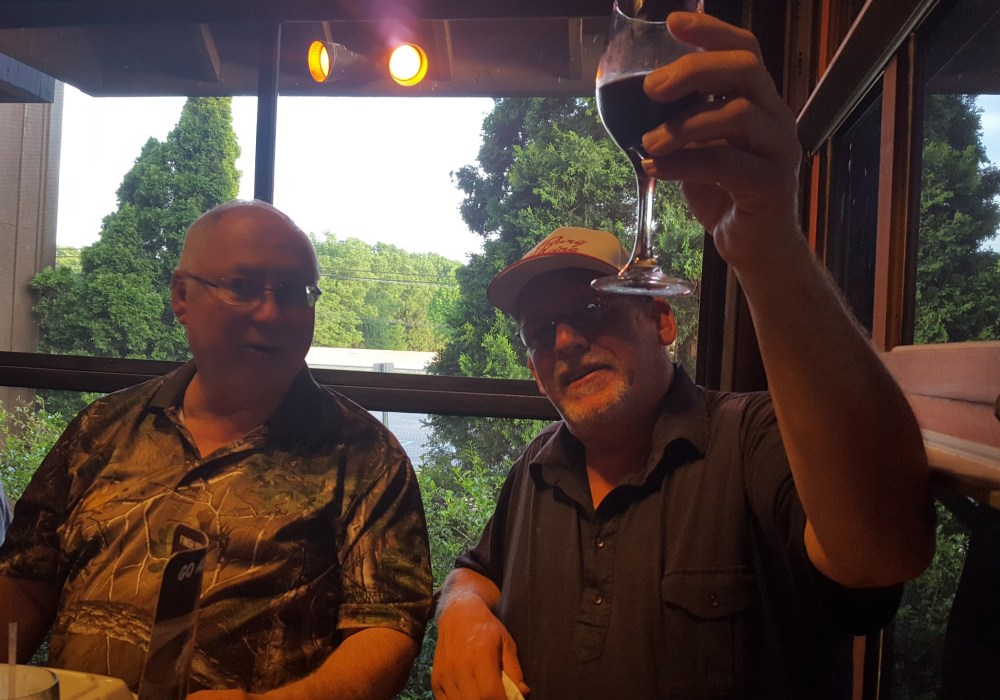
The sign read “There are no strangers here, just friends you haven’t met.”  This turned out to be pretty prophetic.  By the end of one month of travel, we had met many strangers who by the time we had to part ways, were new friends.

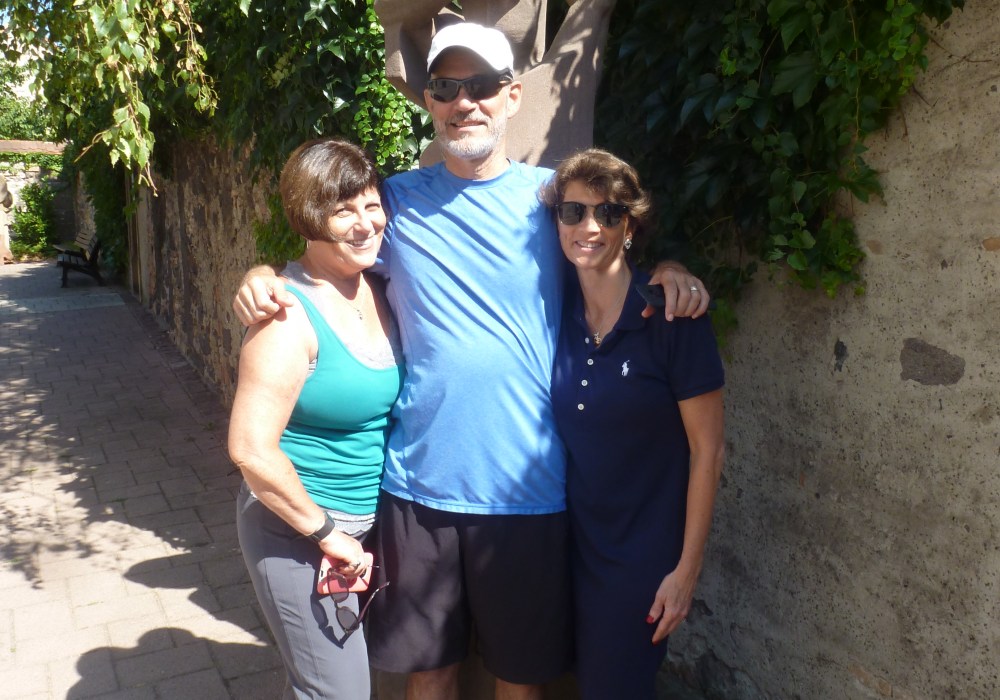
August found my wife and I on a trip up the Rhine in Europe.  It started with us meeting two couples from Nebraska, Mureen and her husband Murray and Gayle and her husband Larry.  We shared stories and drinks and continued those conversations all week long.  Now we also met another couple the very first day and bravely introduced ourselves.  Through the next ten days, we shared walks and talks, dinners and stories of our lives.  But eventually we were saying goodbye to our new friends, Polly and Stu, but knowing we would make a mutual effort to meet again.  Strangers had turned out to be friends we just hadn’t met.

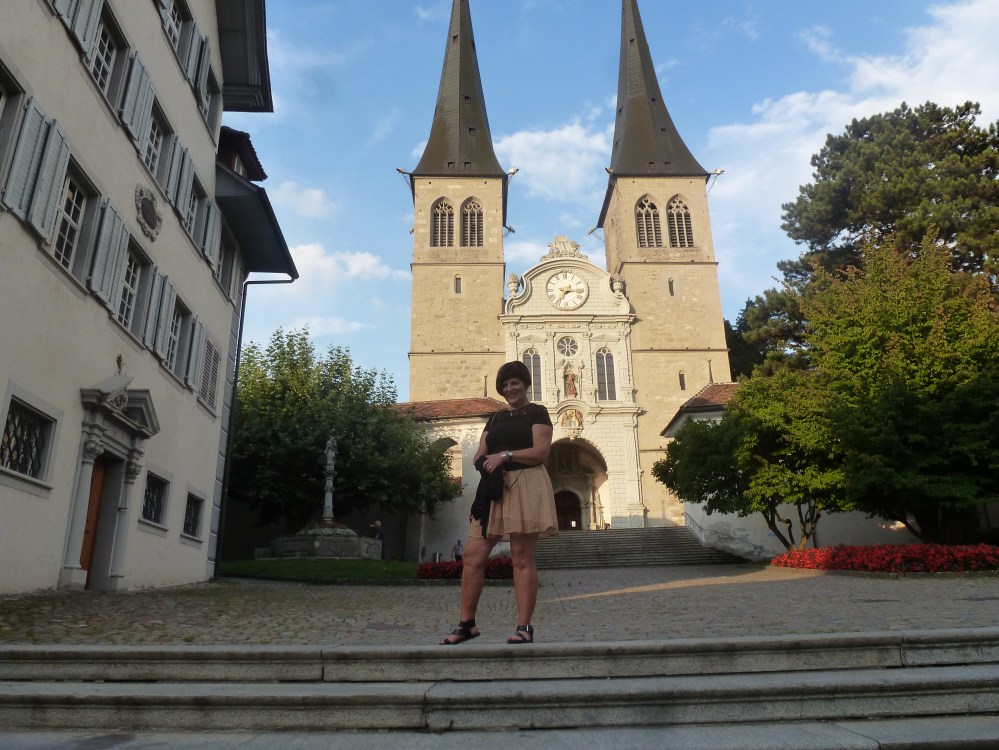
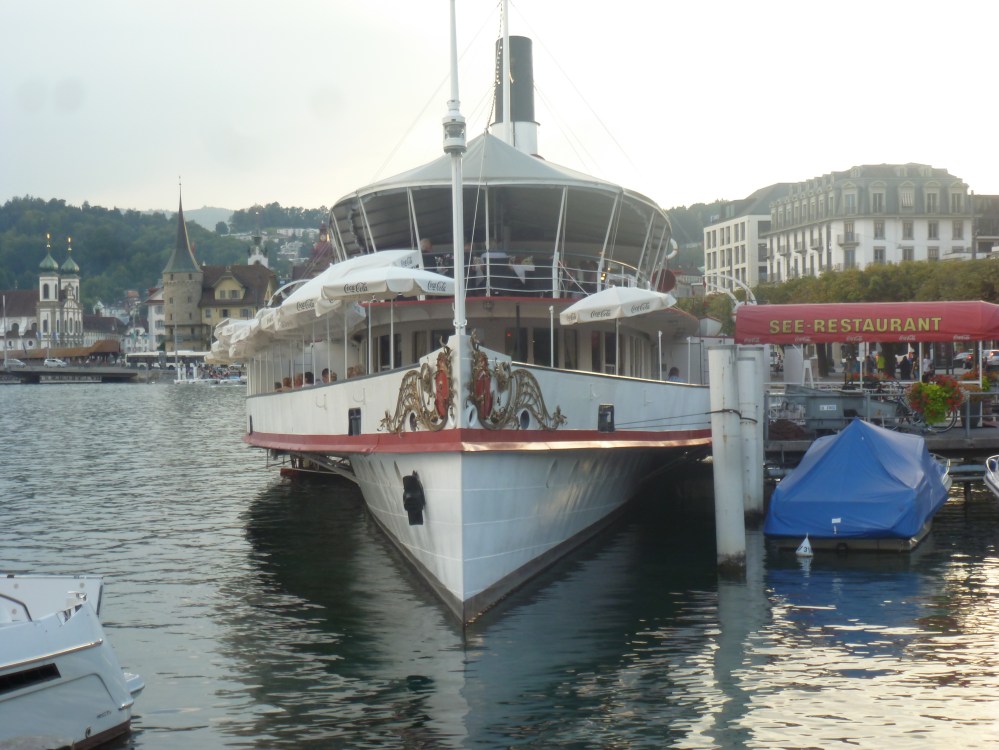
And then there was Lucerne.  We had boarded a paddlewheeler for a trip around Lake Lucerne.  Knowing no local dialects and completely on our own, we took a seat across from an elderly women.  As the boat moved away from the pier, she leaned over and asked if we were from the U.S.  Over the next hour we carried on a fascinating conversation learning things about our new friend, Lucerne and Switzerland.  When she had to disembark at her stop, the women next to her, not knowing any of us, leaned in and said “I’ll take care of them from here.”  And she did.  No language barrier was going to thwart the effort of strangers becoming friends.

My wife and I just returned from a short trip to the North Woods.  On day two of our stay, I headed out to an area golf course.  I was going to squeeze in a quick nine holes somehow hoping I could just play alone and practice my game undisturbed by any semblance of competition.  But this was not to be.  Instead, I was paired up with two gentleman, Gene and his son-in-law, Ryan.  As they had never played the course, I turned out to be their guide.  The three of us shared a very beautiful fall morning and what turned out to be one of my best scores of the season.  As I finished on the ninth hole, we all wished each other well and where we had been strangers just two hours earlier, parted as friends.

The next day, Deb and I took a long bike ride on a trail near our cottage.  When we returned back to our car, which we had left parked at a local pub, we decided we needed some lunch and the pub looked inviting.  It was while we were there that I discovered the sign I quoted at the beginning of this piece.  It was placed prominently above the bar and in the patrons soon proved how true it was.  In no time at all we were in conversation with two local construction workers, the bartender / owner of the pub and two other couples who were traveling like us and had decided to drop in, because that’s what you do at a North Woods pub.  The sign was true, there really were no strangers there.

The next day found us again at the end of another bike ride exploring yet another local pub.  Before you start worrying about my drinking habits, remember that we are on vacation, wait even better, we are retired.  Earlier, as we were locking our bikes and walking downtown, a woman crossing the street had overheard us pondering about this new place, well new to us, and told us it was a great place and that we ought to stop back later when the place opened.  Well it was later and we heeded her advice and entered the establishment.  To our surprise, the women, it turns out her name was Margaret, was not only working there but was in fact the co-owner.  We ordered our drinks and retired to the warmth and coziness of their backyard patio.  There Margaret waited on and conversed with us, sharing her story and getting ours in return.  Within the span of half an hour, we felt like friends.  Hopefully Margaret is reading this blog and is approving my story.  There is no doubt that The Vine in Minocqua will be a new favorite stop on our stays up North and we will look forward to more conversations with the owners, Margaret and Scott.

Our trip was coming to a close when we got one last chance to make a stranger a friend.  It was Saturday and we had just finished golfing.  Not wanting to miss the Badger’s football game, we stopped in the Sayner Pub, yes, I know this is starting to sound like a North Woods pub review but it’s just a coincidence.  We seated ourselves at the bar, best viewing position, I swear, and began watching the game.  We were soon surrounded by strangers who through the comraderie of a sporting event would become our new friends of the day.  Bob on our left, recently retired and living up North and Ryan on our right who turned out to be from Madison.  The Badgers won, we all celebrated and after sharing our stories, parted with the memories and emotions of another well spent day.

This piece would be pointless without a message, okay moral.  One never knows what interesting story resides in the stranger sitting next to you or maybe waiting in the same line.  That is unless you take the step to find out.  To maybe even introduce yourself.  What’s the worst that could happen?  They might just turn out to be the friend you haven’t met.

First Days

This week our children and in my case, grandchild are headed back to school.  Summer is over in some sense and play time is being replaced by school time.  I came across this quote by The Prophet, Khalil Gibran that my sister had shared in a post.

“Your children are not your children, they’re the sons and daughters of life longing for itself. They come through you but they are not from you. And though they are with you, they belong not to you. You can give them your love but not your thoughts. They have their own thoughts. You can house their bodies but not their souls — for the souls are in a place of tomorrow that you cannot visit. Not even in your dreams. You can strive to be like them, but you cannot make them just like you.”

As I read these words and felt them resonate within me, I knew I had to write about my version.

Twenty two years ago this week, I prepared to walk my daughter Kathryn to her very first day of school.  At five years old she was our stubbornly independent challenge.  There was seemingly nothing she didin’t feel she could do on her own.  As we prepared to leave the house, she declared that she did not want me walking her to school.  She was fully intending on taking the five block walk on her own.  As I insisted that it wasn’t going down that way she dug her heels in harder.  After some intense negotiations, I managed to carve out a compromise.  I would be allowed to walk with her to the end of the block before her school but there would be no hand holding.  I accepted this compromise fully believing that she would soften on the way and allow me to go that last block to the school doors.  And with that folly in my head, we set off.

There was no hand holding and as we approached the last block I was being allowed to walk, she informed me she was going to say goodbye and I needed to go home.  The look on her face told me there were no further negotiations to be had.

Now before you think badly of me leaving my precious daughter to walk that last five hundred feet all alone, I at least had one last trick.  As I turned back toward home, with a handshake goodbye, I ducked behind the tree that would hide me from her view.  From my vantage point I was able to watch as she approached the school.  My heart ached as I saw the line of parents standing there with their children, holding hands and hugging them close.  And there was Kathryn, in her first day dress and that Pretty Pony pink backpack.

And then it hit me.  What was the one thing I had wanted for her as I held her tiny body in my arms just moments after her birth?  I wanted her to be independent, to have her own mind about things and the courage and determination to follow her dreams where ever they would take her.  And now, watching her from my hiding spot behind that tree, I realized that she was going to be just fine.

All of this leads me back to the words of the prophet.  We can try to relive our lives through our children. We can try to mold them to the form we would have them take but the truth is they really aren’t ours to keep.  Our role is one of slowly moving away from center stage and back to the wings, where if we are wise, we quietly observe the wonder of life through their eyes.  We understand that we can bring them into this world but it is their world from that moment forward and they belong to it.  They will carve their path and leave their mark and if we trust them to walk that last block alone, the mark they leave, just might be great.

So as you take those first day photos and bid your children goodbye, trust them, trust yourself.  They will succeed if you let them and they will flourish if you encourage them.  This is their first day.

Planes, trains and …..well, you get the reference

And it’s over….well in another ten hours or so.  My wife and I are sitting in the Zurich Airport awaiting our flight into Atlanta.  From there a short hop back across the states will bring us home once more.  The two weeks have flown by and I am not sure I am ready to go home yet.  Europe is a small area relative to the United States.  There are just so many places for the traveler to visit and many of them seem so easily reachable, that I must resist the urge to continue on.

P1040217

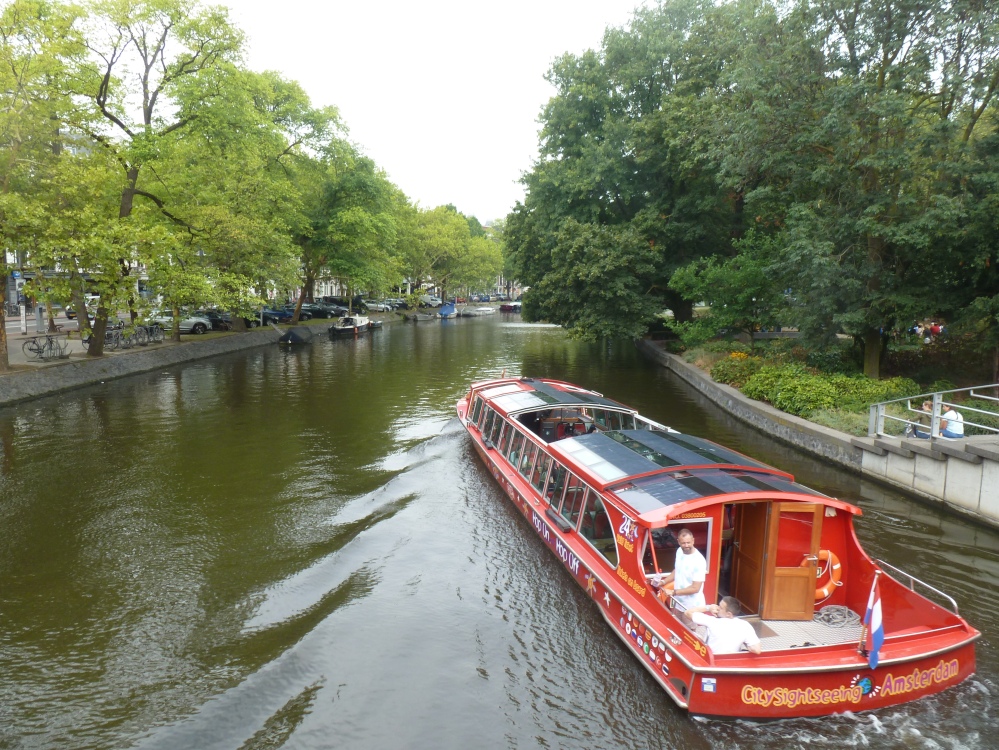
Canal Boat in Amsterdam

P1050067

Cathedral in Lucerne, Switzerland

I have seen rivers and dikes, windmills and mountains, old cities and new.  If I am asked my favorite, I will shrug and tell you that each one had a favorite aspect.  I will remember the people who helped us along the way and the people who became our friends.  Some we may see again and others will remain a memory of a time or an event or a place.  I have taken fifteen hundred pictures and will struggle deleting any of them.  But that is the way of travel.  Unlike home, where we collect stuff, on trips you collect people and memories.

P1040327

Windmill in Kinderdijke, Holland

P1050076

Paddle Wheeler on Lake Lucerne

As I crossed a large piece of Europe, I wrote what ended up as a cross between a travelogue and a blog.  Some of the writings were to make sense of those fifteen hundred photos, but a great deal of the writing was due to the fact that experiencing these things left me wanting to jot down my impressions.  Hopefully a few of my readers found some interest in both.

P1040871

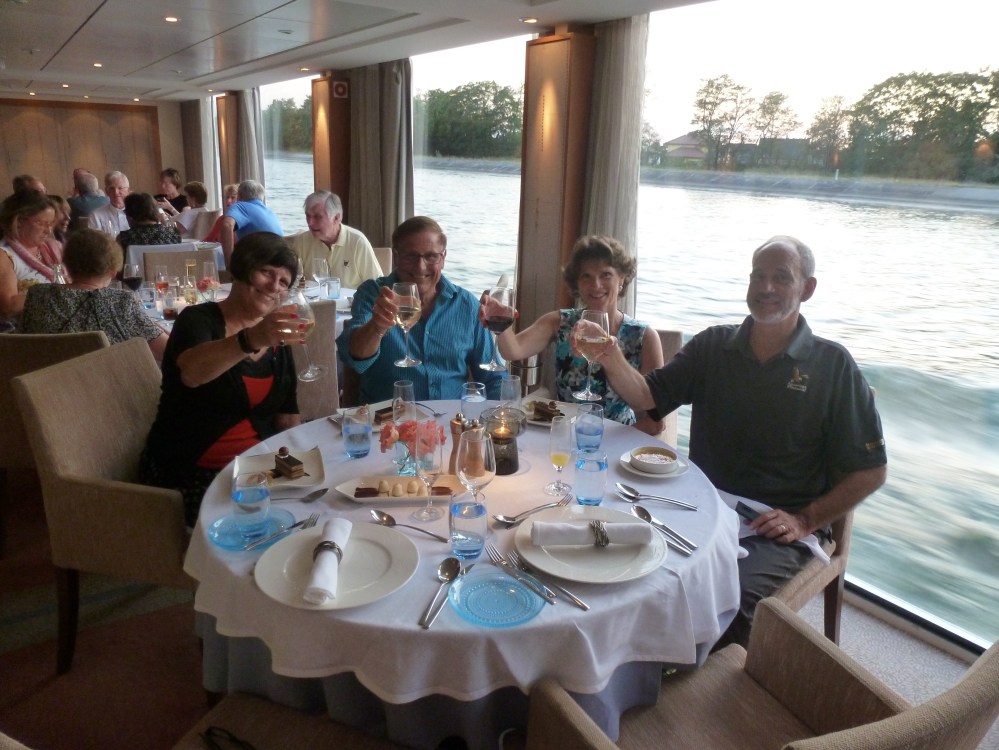
New Friends, Great Travel Partners

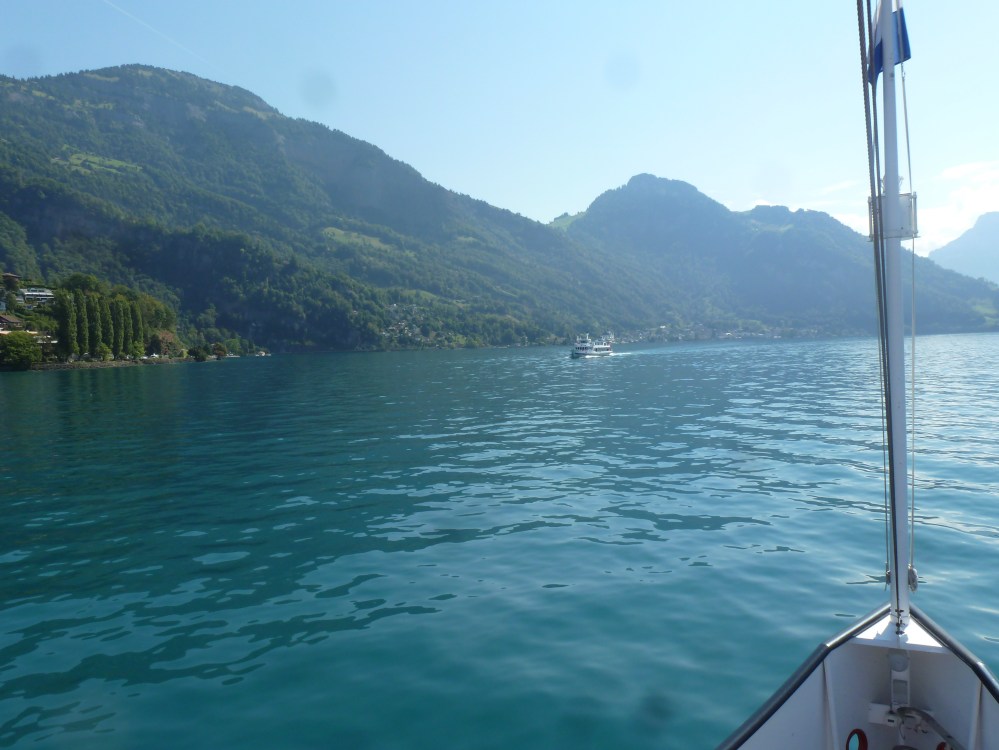
When you travel, you try hard to capture the beauty and depth of what your eye sees and then attempt to transfer that through the lens to the photo.  You hope that it will show the colors of the water or the steepness of the mountain or the tallness of the buildings (seems so much more descriptive than height).  Sometimes it comes close but most of the time the photo only approximates the true effect it had on your eyes.  And then you feel the need to describe it in words and the travelogue begins.

P1040983

Lake Lucerne, Switzerland

I have been blessed to have the where with all to afford travel, the ever planning spouse to keep me even just a little on track and the health to walk the cobblestone streets or climb the mountain of steps.  I can only hope that the would-be traveler does not wait too long or is not too delayed by life’s busyness to take the first step on their journey.  The world is a small place, much smaller than we pretend it to be.  We all too often think it too large or too complicated or even too scary to explore.  After taking an automobile and a plane, a bus and a tram, a boat and a train and even a cable car and a paddle wheeler, I am proof that one not only survives the adventure, they return just a little more worldly and richer for the experience.

P1040740

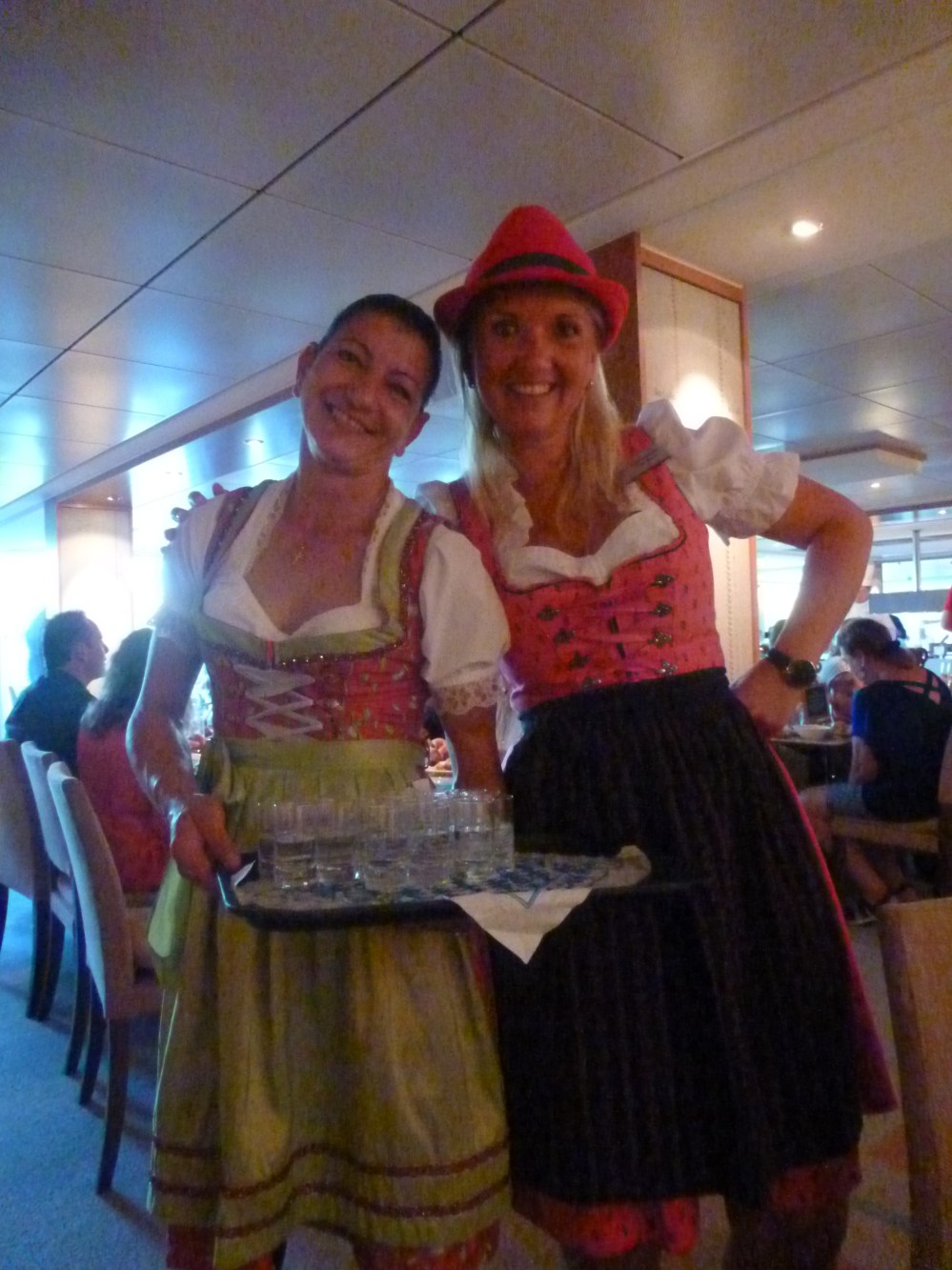
Taste of Germany Celebration

The things I know and you don’t

Travel is an incredible thing.  You can learn things you never knew but you have to be in the right place at the right time.  I have always resisted my wife’s desire to be part of a tour.  My idea of travel has been to explore while hers was leave the driving to someone else.  I held to the premise that exploring will uncover those hidden nuggets, accidently while presenting them as pleasant, most of the time, surprises.  The problem is, the odds are you might just as likely discover that you were lost and only thought you knew where you were.  The only surprise turns out to be all the things you missed and without my wife’s method, never even knew you had.  I believe the term is “blissful ignorance.”

Lest you think I am defending my approach, you are wrong.  I have, after several, no, many successful times using with my wife’s methodology, succumbed to the idea that at the very least I need to compromise.  The beauty of my wife’s reliance on tours and tour guides is that I have learned things about an area or region or country that I never would have if I had just been stumbling around in the “explore” method.  And I might add, in such a shorter period that I still had the time to indulge my desire to explore.

This trip across the Netherlands, Germany and Switzerland has provided so many “aha” moments each and every day.  The tours have truly exposed us to the culture and history of the cities and countries we have traversed.  The tour guides have entertained, skipped the lines and cued us in to the history, humor and ethnicity of the tours provided for us.  Each and every time they have left us with personal space to spend exploring with just enough direction to leave us satisfied that we had seen the things that mattered.  Call it the “cliff notes” of Europe’s greatest cities.

As an example, just today we learned the connection of Professor Bunson, Mr Heinz, Jacob Astor and the Preslin family line to the city we toured.  I found out the origin of Mannheim Steam Roller, the real reason for the success of the Benz Company and the significance of the monkey statue just this side of the Heidelberg Bridge.  And let’s not forget that there were John Deere’s there but they call them Bull Dogs.  And now you are waiting for me to explain these statements………Seriously?  That was the point of this segment.  Unless you travel, unless you take my wife’s advice, you will be stuck with Google.  But I know because I got the chance to be there, to hear the stories and even better, to experience them.

My wish for everyone is that if you haven’t yet, you will one day get the chance to travel to at least a few of the places on your bucket list.  And that if and when you do, you’ll realize that there’s no shame and you are no less the explorer when you take the occasional tour or when you rely on the knowledge and wisdom of the guide.

Life on Board

Transportation comes in many flavors.  The planes have their air lanes.  The auto stays to the highways while the train sticks to its tracks.  Our boat has its river, in this case, The Rhine.  The differences are significant.  While in the air I can only get an idea of what I am seeing far below.  Granted, it does provide a very unique perspective.  The train and the auto, because they are grounded, afford me a view of the surroundings I pass through, but the speed diminishes my ability to take it all in.  The boat, well this is where the difference truly shows itself.

The pace of a boat is flat out slow.  If you are trying to get from point A to point B in any kind of serious time limit, it’s not going to be your first choice.  However, if you really wanted to take in the scenery, then a river boat is a perfect choice.  With its wide vistas and its unobstructed views, the river boat gives you everything year eye can take in as every bend in the river provides a new vista.  The slow and easy pace will lull you into the relaxation your mind and body could never convince you to take.

P1040627.JPG

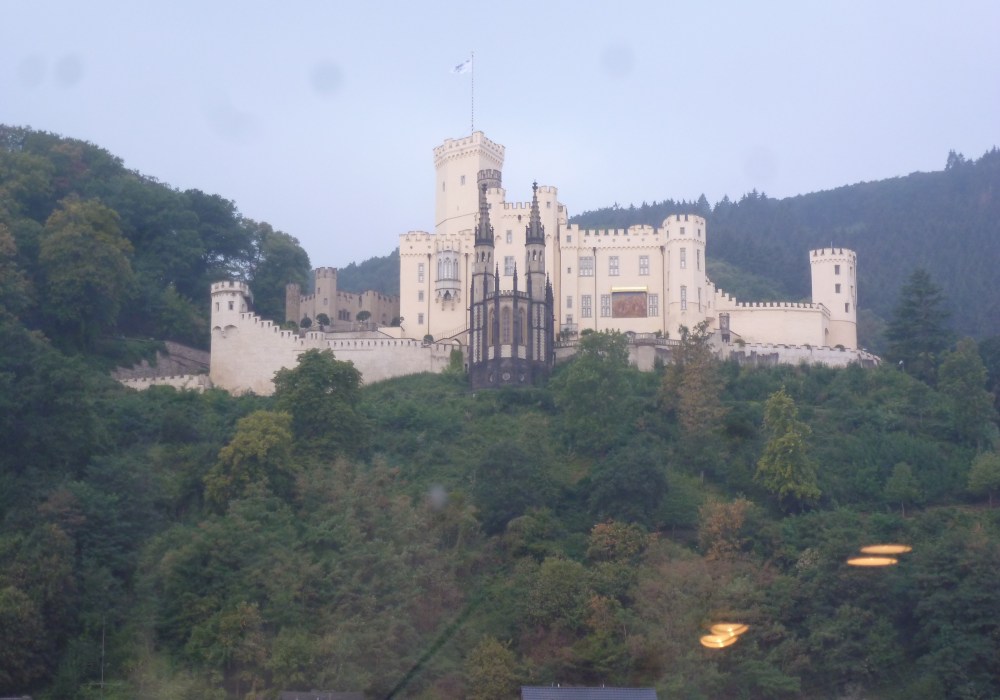
We are four days into our river trip and I thought I would describe life on this boat.  We rise around 7:30, and check the weather and our location by stepping out on our veranda, really try not to take a trip without one.  After reading the daily news summary conveniently delivered to our room, it is down to breakfast.  We can eat inside or take our breakfast on the front sun deck where the views rise to meet us.  Am I sounding like an over privileged, pampered and spoiled tourist yet?  If so, it’s not my fault, for this was the cruise line’s desire to begin with.  Well yeah, I confess.  Later in the morning, we will assemble on the fore deck to depart the boat in search of our guide.  The cruise line has set up an area tour for every day.  If I don’t wish to partake, I can retire to the sun deck or back to our stateroom veranda.  Today, we toured the 800 year old Marksburg Castle.  I may mention that again later.

P1040476.JPG

Afternoon generally finds us sailing to our next site, no fuss, no worries, no work on our part.   We can watch the scenery roll by as the river slides quietly by beneath our boat or take in a discussion or two provided by the entertainment host.  By this time, unless you are a hermit, you will have met ten to twenty new people from multiple states and countries.  If you were diligent, you will perhaps have become travel partners with one or two of the couples you have met.  Recalling the names and places is challenging but everyone is forgiving.  In our case, we have met a couple with many similarities and have been arranging to do activities together.  They are open and warm, interesting and fun.  Who knows, we may stay in touch after the trip, for a moment or a spell or perhaps for a lifetime.  The beauty is, that for now we are travelers in arms.  I teased my wife the first night.  While sitting at the bar, I asked her if we should fish or be bait.  Fishing meant we would go out and seek couples to talk to.  As bait we would sit at the bar and attempt to look interesting.  Which one did we choose?  Maybe a little of both.

Evening on the boat is a mixed bag.  Sometimes, as will happen tonight, we are docked in a port city and we can explore the city center by foot before working our way back to the boat.  Other nights, we will retire to the lounge and listen to some entertainment while locked in conversations ranging from family and kids, to current and past careers, next or past trips and anything in between.  Still other nights, exhausted from our excursions, we may retire to our state room for an early evening or perhaps a moonlit lounge on the open air veranda, watching the river glide beneath us as we head for our next port of call.  No matter what the choice, the day has provided us with sights and experiences that we will not soon forget but that with any luck at all, we will surely repeat.

Got to close, we are off to tour the town of Rudescheim with the goal of finding a cozy place to dine and another chance to lift a toast to tomorrow.

P1040616.JPG


If its Thursday it must be Cologne

After an all-night sail, we arrived in Cologne.  Well, close to Cologne.  There was a medical emergency yesterday afternoon and a gentleman had to be taken off the boat and transported to a Dutch hospital.  Great care was taken by the cruise line and we were later thanked profusely for our understanding of the situation and the delay.  This morning, the cruise line arranged for an early embarkation at an alternate site and transportation by bus to the city of Cologne with a promise to meet us later at the Cologne docks after our day touring the city.

Our tour guide began our tour by explaining just how boring and plain Cologne would be and then proceeded to fascinate us with the history and sites of the city.  A university professor of medieval history with a dry wit and perfectly timed sarcasm, he both educated and entertained us over the next two hours.

Cologne, as we learned, is an ancient Roman outpost for what was then Germania.  The city was completely leveled by Allied bombing raids in World War II meaning that even when buildings looked old, they were in fact no older than that period.  Cologne is a stubborn and traditional city that believes in not changing.  As a result, they rebuilt in the style of the original buildings.  The city was always and still is built on top of the ancient Roman walls.  Cologne’s two main streets lie on the lines of the old Roman Road and their purpose mirrors that of the old Roman city.  The building done on the skeleton of those old walls still divide the new city form the old city inside its Roman footprint.

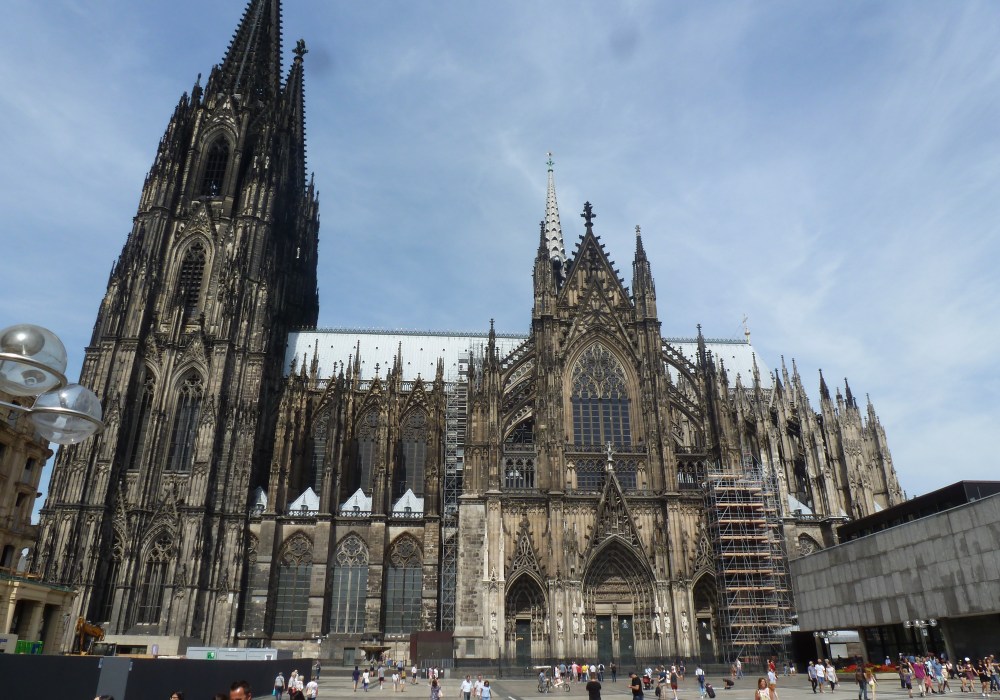
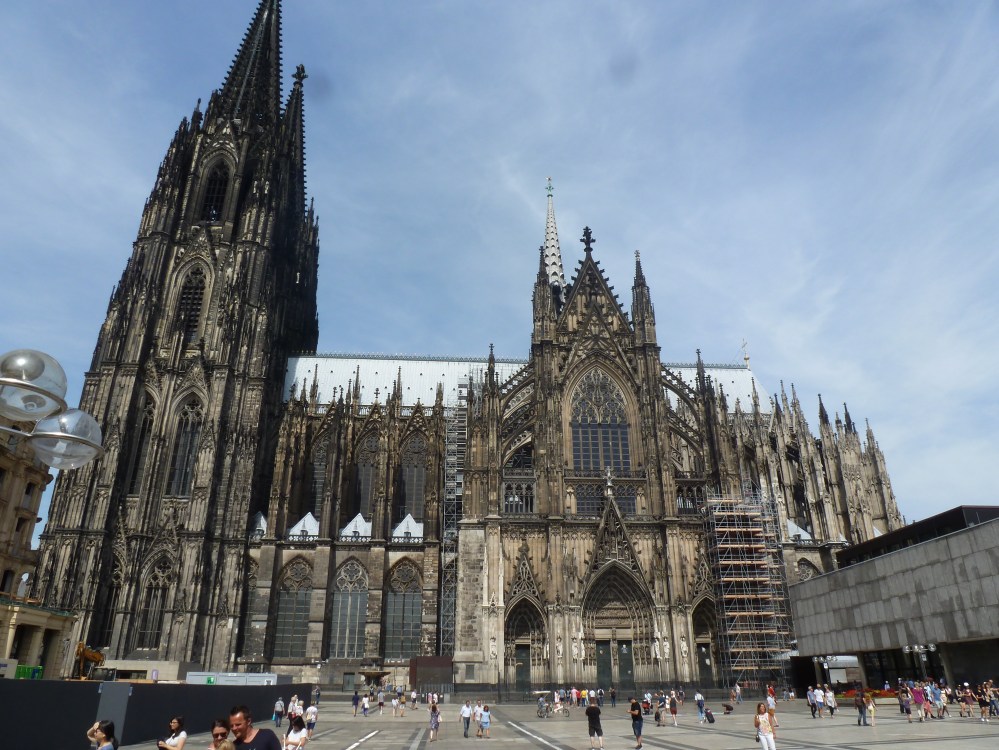
The one very prominent original building is the impressive Gothic Cathedral of Cologne that sits in the city center just up from the old Roman port on the Rhine.  Legend says that it was spared by the Allied bombers while others say it was a miracle and God saved the church.  Our guide watches our expressions and then at just the right time says “sorry, just not true.”  It was bombed just as all other buildings in Cologne, by chance or by accident, and was hit by no less than thirteen separate bombs.  So how does it survive?  The secret lies in the structure.  It is predominately covered with windows and the walls are made of heavy volcanic stone.  As the bomb explodes, its energy is dispersed through the windows while the heavy structure of the walls survive the rest of the blast.

There are so many statistics about this building, including the time it actually took to construct, but I will leave them to you, the reader, to research with a little time spent on Google.  I will share one thought provoking fact.  The windows I spoke of are all original and made of beautiful stain glass.  One even dates to 1248 AD when the cornerstone for the cathedral was first placed.  After telling you that it was the windows absorbing the blast that ultimately saved the cathedral, how can they still exist?  The Nazis as early as 1933, years before the war began, removed the windows and hid them away.  In the words of our guide “they knew early on, that what they were doing was going to end in a serious thrashing and took the precaution to save the windows in case they won.”  Talk about giving one serious pause.

We finished our day in Cologne with new found friends, sharing a local brew or two, or maybe even three, in one of the open market areas of Cologne.  Our toasts were genuine.  “To good travel, to a great adventure and to new friends.”  This is what travel is about and why it is so important to experience.  Travel shows us the diversity of the world and its cultures while reminding us that enemies can become allies and that at the end of the day, we really aren’t that different.  We are all travelers going somewhere and when our paths cross we discover that our hopes and dreams sound amazingly similar.

Castles tomorrow.  Stay tuned.

Tilting at Windmills

I am comfortably ensconced on the good ship Ingvi of the Viking Fleet.  We have a reasonably sized, open veranda room on the top deck.  It is nearing the end of day two and we are sailing toward Cologne tonight.  Tomorrow morning we will awake to the portion of the Rhine running through Germany.  We have been told that in the upcoming days, our boat will be passing by over forty castles located up ahead in the Rhine Gorge.  But today was about windmills and their role in the history of the Netherlands.

P1040436

Marksburg Castle

Before our day’s outing, we were briefed on the history of the Netherlands.  The name itself means “low lands” and the costal third of the country holds 85% of the population on land that is up to three meters below sea level.  So why would people live in an area that would be so difficult and expensive to keep dry?  The reason is simple, the land is fertile and the coast provides the base for their trading.  The end result is that the people of the Netherlands are pioneers in the art of water management.  They raise the water the nearly ten feet necessary to move it into the rivers that drain the area leaving behind the rich fertile land that is now dry land.

P1040327

As you can guess, this is a major task requiring ingenuity at every step.  The water must be sent out and the sea must be kept from coming in.  Early on, the water needed to rise around three feet, but due to further sinking of the land (see the effect of peat farming), the height required, increased.  The solution was found in windmills.  The windmills, set in a series, were able to gradually step the water up the ten feet needed to drop it into the rivers.

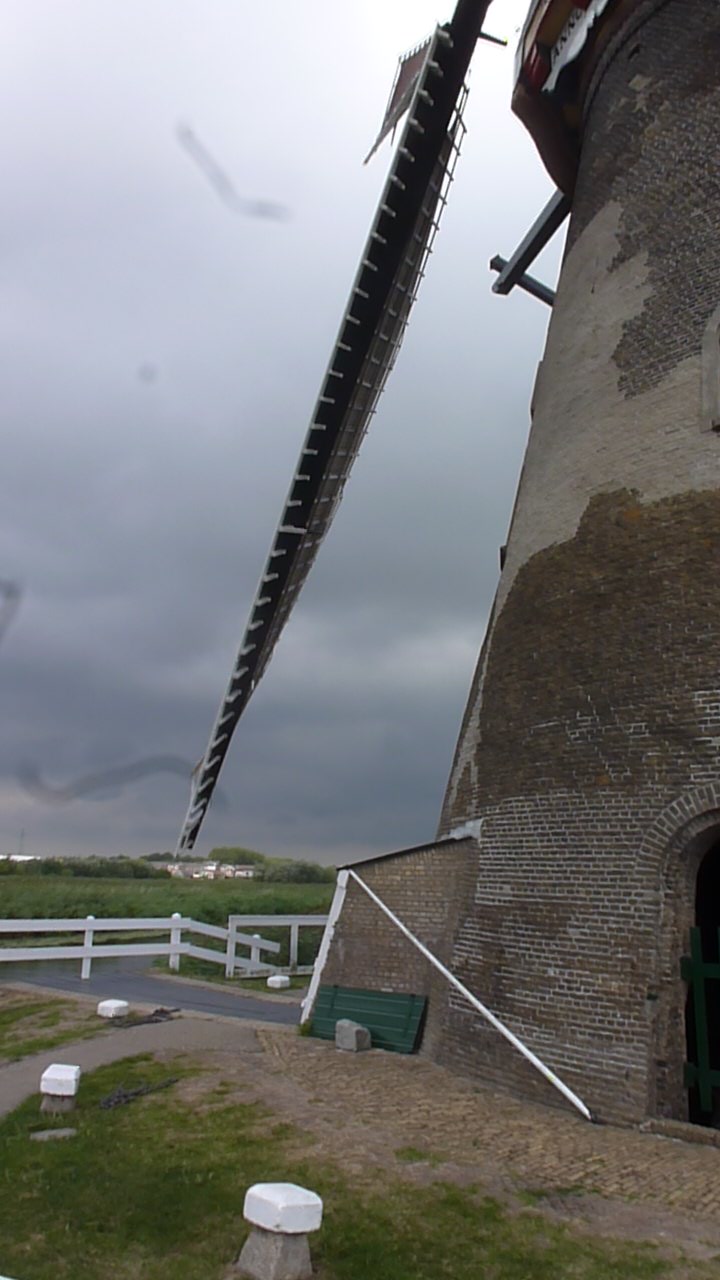
The windmills, still in operation today, date back to the 1700’s.  We were allowed to enter a working demonstration windmill, climb to its very top cap and witness the huge wooden gears working the pumps located in the base.  The woosh of the four huge sails was incredible.  To our surprise, we were told they were only turning at about one-third of their maximum speed.  Even at this speed, the thought of being hit by them as they turned less than a foot from the ground, kept spectators well behind the barrier gates set up to keep us a safe distance back.

P1040349


When inspecting these behmouths, you are first awed by their sheer size, afterall, the miller and his family would live inside the windmill.  When you realized that all of their inner workings were hand made of wood and that they are still running after nearly three hundred years, you are struck by the workmanship.  It was explained simply as “without the windmill, there would have been no Netherlands to inhabit.”

Today has been another day of reality intercepting perception.  I have an improved understanding of why the Netherlands exist and a renewed respect for the farmers turned civil engineers who invented and continue to improve water management.  They are proof that necessity is the mother of invention.

Day two on the river is coming to an end as I type this blog.  Tonight I will sit out on our veranda and listen to the river roll by as our boat sails its waters.  Later I will retire to the vibration of her engines and the gentle rocking of the waters as they slide by beneath us.  Tomorrow we explore Cologne and I can’t wait to record my next experiences.

P1040395

Cathedral of Cologne circa 1248 AD


Impressions of Amsterdam… or how I so wanted to be Dutch

This is my fourth entry.  If you missed the other three and want to catch up, go to http://www.kenismsblog.com and look for the “Journey Begins”, “Somewhere over Ireland”, and “A little History and a little Beer”.

I just finished my third day in Amsterdam and felt it appropriate to give a summary, caution…. I didn’t say it would be brief.  Many things about the city stuck out for me.  It is ironic that I grew up in a small town that was mostly Dutch descendants but it took me until day three to put that in perspective when I saw a familar name on a boat slip.

Enough about reminiscing.  In no particular order, these are the five things that most impressed me or at least left my opinion changed…. canals, bikes, trams, pulleys and the red light district.

Canals are laid out like beltlines in Amsterdam and they not only provide an alternate transportation system, they drain the city, divide the city into neighborhoods and provide a landmark for navigating through the city.  They flow gracefully as they surround the city and provide dock sites for countless houseboats.  The tour boats ply their waterways all day and into the evening, giving all who climb onboard a very different view and a unique perspective on the city.

P1040217

As you navigate the city and especially its canals, you will notice pulleys protruding from the upper eaves of almost every building.  They look perfectly part of the architecture but are utilitarian in purpose.  Taxes assessed against buildings in the city were originally based on the frontage of the building.  As a result, the locals reduced their tax liability by building their houses perpendicular to the street they faced.  This reduced their taxable frontage but meant the buildings were extremely narrow, often no more than ten to twelve feet.  This adaptation left them too narrow to move anything of size into the building much less up to the upper floors.  The solution was pulleys.  The pulleys allowed the tenants to simple hoist their furniture and goods up to and through the windows.  The effect is impressive.  Some buildings, built very close to the canal bank, would go so far as to slant the upper floors out over the street below to further advantage the canals.

P1040245

One feature of Amsterdam that stood out for me was the trams.  I have been to cities with tram systems, but Amsterdam takes it very seriously.  The trams run everywhere and on time and timely.  I never had to wait more than ten minutes nor did I have to work very hard on what tram I needed to board.  To make life even better, the passes are inexpensive and so easy to use.  Scan in, scan out.  Jump on, jump off.  Now I admit we scanned out improperly one night causing the system to think we had ridden all night, but after a slight inconvenience, a stop at the conductor’s desk, we were back on track, no pun intended.  Next time I am sitting in a line of semi-parked cars on our beltline, I will be thinking longingly of what I can only wish we had.  Thank you Amsterdam.  You gave me every opportunity to explore your city.


It would seem a glaring ommission if I were to skip over the red light district.  Afterall, it is likely the first thing you thought of when Amsterdam was mentioned.  I am happy to tell you it exists.  It is a business but it is not quite as visible as your imgination might project.  It is in fact, well marked and yet hard to actually find.  As you wind through the streets and alleyways of “old town”, you find yourself craning your neck looking at every window for a glimpse.  At best you will find the occassional bikini clad mistress in one of the windows.  The red light district is historic in nature and actually meant to keep the city cleaner and the business ironically less obtrusive.  The Dutch were traders and Amsterdam was their base.  As such, there were plenty of sailors and traders to make prostituion a very profitable endevour.  Without the control of the red light district, the confrontation would be much more…well confrontational.  The red light district provided control of the taxes and the location.  Did I go looking for the district, of course I did.  But then everyone does.  It’s just history you see and pretty much required.

amsterdam-red-light-district


I have saved the best for last, the bikes.  I can only try to do this topic justice.  There are, at best estimate, over 600,000 bikes in Amsterdam.  Considering the population is 900,000….well, pretty impressive.  I suspect that World War Two had a lot to do with it’s growth, the flat landscape and attention to bike lanes only add to the attractiveness of this mode of transportation.


The numbers are one thing.  I knew, because everyone told me, that there were going to be bikes everywhere.  But it is so much more.  In America we ride fancy bikes, often ten speeds at the very least, hunched over our handlebars and attempting to see how far and how fast we can ride.  Some might use their bikes to get somewhere, but most of us just ride to ride.

In Amsterdam it is all about the transportation.  The first striking difference is the bike itself.

P1040298

They are utilitarian in design, three speed at best, with straight handlebars, up high where you can ride erect, eyes on the road ahead.  The bikes almost look old fashioned with their cargo boxes, child seats and saddlebags attached.  But the effect is so different.  Bike riders ride, no, glide by effortlessly, easily keeping pace with the cars, buses and trams that travel one lane over.  This creates a slight problem for the uneducated in that they own those bike lanes and the pedestrian must be ever vigil.  I had been warned about that and had envisioned the American version of a speeding biker, finger erect, letting me know I had invaded their sacred space.  But it was so different.  They owned the bike lane, even earned it with their elegant simplicity, but it was just the gentle jingle of their bike bells that you would ever hear.  Two days in, I was getting accustomed to their prescence and had come to respect their right to the lane.  Afterall, they were going somewhere, be it to work, the market or to some other event that they would arrive at without any addition to the carbon footprint.  Just tire tracks left quietly by human effort alone.


There is really no way to fully describe Amsterdam.  I and other travelers can tell you our stories but in truth, you will just have to experience it.  I hope that you will one day get the chance and I truly hope you won’t miss the opportunity.

It is almost midnight here and the river boat I am on, the Viking Ingvi, has just left the pier.  Tomorrow I get to expand my exploration as we head up the Rhine to new sights and new opportunities.  I hope you will keep following me, but until the next edition, I am off.

A little history, a little beer

Today has been a lot about understanding the history and the culture of Amsterdam.  The history was part of a walking tour but also included a visit to the Anne Frank House.

We read of the atrocities visited on the Jews by the Nazis in World War Two, but we can’t begin to fathom the unbelievable inhumane nature of it until you face the reality physically.  The story unfolds before you as you walk through the secret passageway of the hidden annex.  It is striking in the sacred aura of its cramped areas and the desparate mood of forebodding that still saturates the visitor’s senses.  As you listen to her story, read to you from the pages of her diary, you cannot help but feel both pity and anger.  I left with a heighten sense of anger towards any that would still today support the Nazi beliefs or simply try to deny that this period in time and the crimes committed ever existed.

P1040219

Monument to the Resistence

Going back to the history walk, I found it interesting when the guide mentioned that  ironically, while the Dutch suffered so severely by the Nazi occupation and slaughter of the Jews, her own country was guilty of atrocities against Indonesians as part of their world colonization.  She went on to remind us of their involvement in the slave trade.  As I listened to this confession, I thought of our own history of slavery and our inhumane treatment of an entire race of human beings.  Every country seems to have its period in history that we can chose to bury or remember so as to never repeat it.

Lest you are thinking this was a dark day, it really wasn’t.  We saw marvelous architecture and art, visited the public market and learned fascinating pieces of Dutch history.  Fun fact, we forget that it was the Dutch who gave us New Amsterdam.  Ceding it to the British changed its name to the one we recognize, New York.

P1040212

A Taste of the Public Market

P1040245

Deb always said she wanted a house on the water?

I promised you a little bit of beer as well.  The Dutch will tell you that they do not really have a unique cuisine, unless you count their frites, but rather offer flavors from all over the world.  This is part of their heritage as the market traders of the world, see Dutch History 101.  To that end, I decided I would be sure to explore their selection of beers.  Last night was Heineken and today it was Amstel.  I still have Stella Artois to go, likely tonight, and then I will have savored the known Dutch offerings.  Well not so fast.  Remember, I said I would try to be on the other side of the camera lens.  After a discussion or two or three with locals, it became clear that all three beers are really just tourist choices.  In one of those conversations, I was given a list of craft beers, mostly unpronouncable, that one MUST try.  There is a lesson here for the traveler.  When you stay close to the city centers, you will be offered the tourist fare.  It is only when you venture farther out that you will begin to savor the true tastes and flavors of the culture.  Strike up a conversation, learn a few words and terms, seek out the tucked away spots and you will begin to feel less the tourist and more the visitor.  Try hard enough and you may even begin to feel like a citizen.

P1040244

Debi Does Amstel

But now the night beckons and we must go explore.

Somewhere over Ireland

We have been flying all night, which is a relative term.  While my watch says it is 5:00 am, the outside tells me it is much later.  Seven hours later to be exact.  It is a strange sensation, especially if it is the first time one has ever done it, to fly east, racing toward the sunrise.  The airlines, Delta in our case, does everything possible to help you through this body clock dilemma.  You are served dinner at 11:00 pm, lights and all noise dimmed, eye shades handed out along with blankets and pillows all to get you ready for the big time shift that awaits you.

I walk through the plane several times during the wee hours of the morning, enviously watching the seasoned travelers actually sleeping.  But sleep eludes me.  Though the seats are “comfort seats” designed for extra leg room, my legs will not let me sleep.  They twitch and remind me that I am sitting up when they want to be stretched out parallel to gravity.  The night passes and then at roughly 1:00 am, my time when I should be sound asleep, the plane catches up with the sunrise and reality sets in, you have reached tomorrow, today.

The plane comes awake at 4:30 am.  By this I mean that the lights are slowly brought up and breakfast sounds are coming from the galley.  At 5:00 am we are having breakfast, while miles below, somewhere over the coast of Ireland, they are sitting down to lunch.  As we are landing soon, my body will just have to adapt if this adventure is to begin.  It has been twenty-four hours since I got up in my bedroom thousands of miles behind us.  The world has shrunk and we aren’t in Kansas anymore.

Next stop, Amsterdam, with its canals, windmills and bikes…..hundreds and hundreds of bikes.

Amsterdam