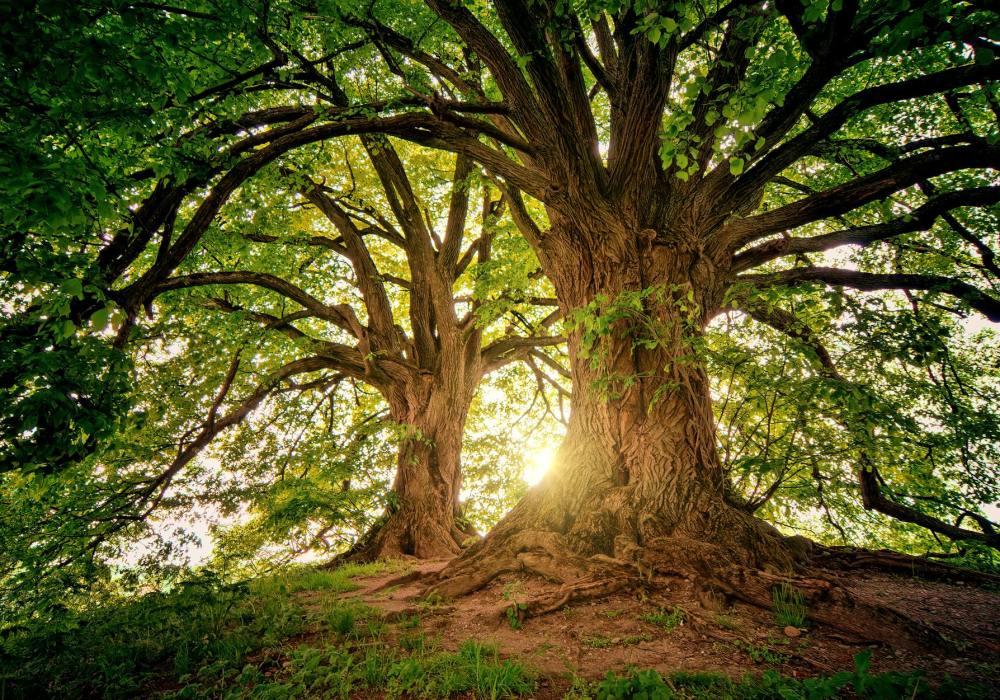
I was recently at a celebration of life, when a friend of the person we were celebrating stepped to the mic to share his thoughts. In the midst of his remarks, he made a reference to old men planting trees. It was a way of implying that she had left her mark in life at that her memory would live on even now that she was gone.
This remark struck a chord with me and inspired me to look up the background of that partial quote. The full quote I first found was “A society grows great when old men plant trees in whose shade they know they shall never sit” and was credited to an ancient Greek proverb, but the authenticity was questioned, especially the “ancient” part. After a little more research with the help of Google, the oldest recorded rendition was cited in the 1951 book, The Life We Prize, by Elton Trueblood. He wrote “A man has made at least a start on discovering the meaning of human life when he plants shade trees under which he knows full well he can never sit.” Regardless of the exact wording or the cited source, I intend to use the Greek version for its simplicity and its relevance to my interpretation of the term legacy.
A legacy by its definition is a gift of money and is associated with the passing of wealth from one generation to the next. In the more colloquial use of the term, it is often used to define the impact one’s life leaves on the generations that follow. We make a great deal about the legacy a famous person might leave for the world, but the truth is, we all leave our mark on the world, our legacy. Some legacies are great and deserve the reverence they garner. Abraham Lincoln left his legacy, elegantly defined, in the Emancipation Proclamation. Benedict Arnold also left his legacy, but it is not one we revere. Hopefully, the mark, or legacy we leave, will be of the revered type, regardless of whether it is monumental or not. The question is, do we shape our legacy or does fate? And, if we shape it, how and when do we begin?
Let’s go back to that celebration of life I spoke of. The attendees who were courageous enough to step to the mic, and there were many, spoke of their recollections and memories of Kathy. They spoke of her as a hard worker who motivated others and had fun with co-workers. She was ethical and respected the rules. They spoke of what a good friend she was to those who came into her life. She was generous with her time for friends and family. She was kind and loving and fun. She was remembered. In short, she had left a legacy for her children, family, and friends. Even if the world may never experience it, her family and friends certainly will, and who are we to say that those same family and friends won’t go on to impact others, others who might in fact, impact the world? And all thanks to the person Kathy was.
When I think of those words, “Old men plant trees…” I think of my children, grandchildren, and my grandchildren’s children. What world are we leaving them? Are we proud of our legacy or do we need to be planting more trees? I want my family to say that I left a legacy that they are proud of, that I was kind, a little funny, a little wise, and that I tried to do those things that would make life better, not just for them, but for society. I want them to understand that I voted intentionally for candidates who truly represented the people who elected them, who protected our society, our environment, and our democracy. I want them to know I cared about the environment they would grow old in and, in my small way, fought to improve it. I want them to be able to sit in the shade of the trees that I planted. That’s the legacy I want to leave.
None of us get to attend our own funerals. We can plan the event, but we won’t be giving the speeches. We can, however, shape the memories and stories they will tell and the legacy they will remember long after we are gone. It’s never too late to change as long as we start planting the trees.
 kenisms